Curriculum
Our students are supported through a broad and balanced curriculum, which is adapted to support them according to individual need.
Through our adapted curriculum, our learners conquer barriers, exceed expectations and find their own unique successes.
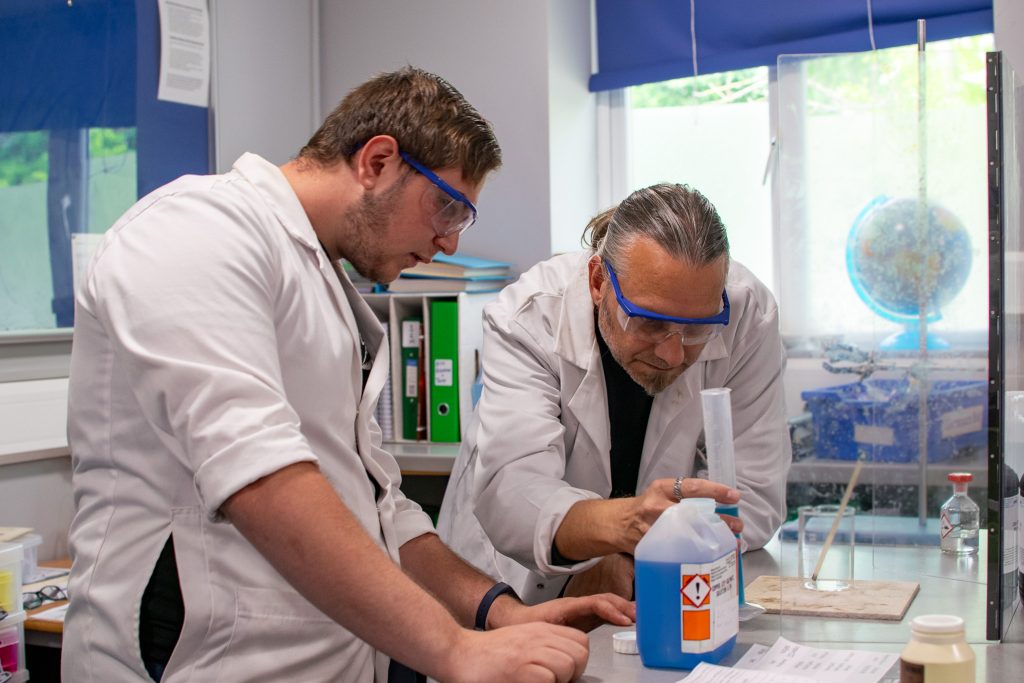
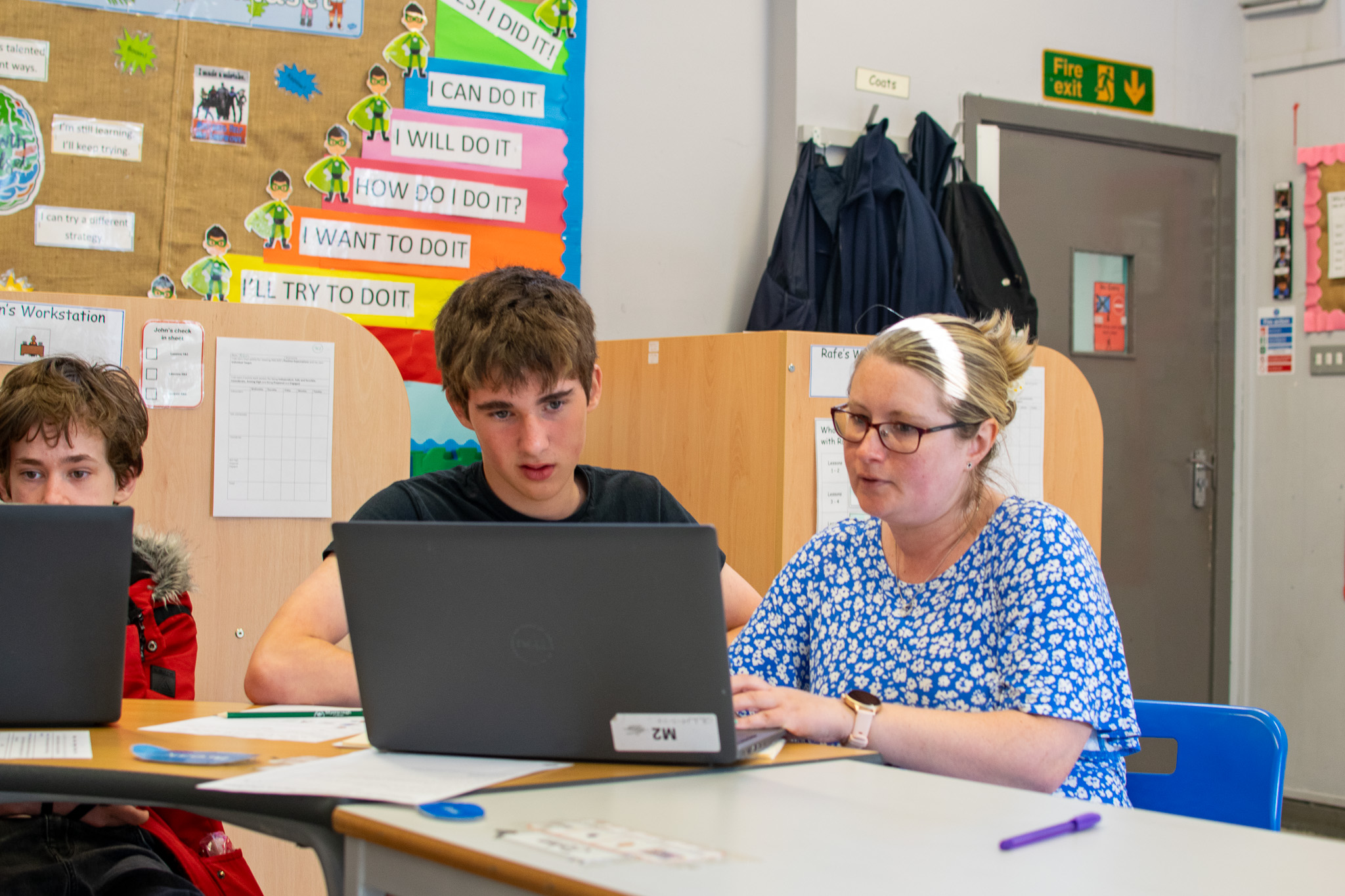
Learning at your level
We have four different pathways at Inscape – Champions, Explorers, Adventurers and Pioneers. Each path provides a structure for our learners.
From the moment you choose our school, we work with you to support your child’s education, health and care needs. We’ll then get them started along the right pathway. As things change, your child might move between different pathways to suit their needs.

What does success look like?
Every learner is on their own journey, so we believe in celebrating individual success. We see positive outcomes for our students in six key areas:
- Developing emotional wellbeing
- Preparing for adulthood
- Growing knowledge and understanding
- Mastering economic wellbeing
- Learning how to take positive risks
- Knowing how to stay safe and advocate for themselves
Curriculum Stages
At Inscape House School, we recognise the barriers that some of our students may have faced in previous education settings. We offer a holistic education that provides a rich, broad and balanced curriculum and continual opportunities for personal, social and emotional growth. We assign equal value to all.
Primary school
With a three-year rolling programme, Adventurer and Pioneer students explore a formal curriculum with clear overarching themes to make learning engaging and purposeful.
- Maths
- English
- Reading
- Science
- Humanities (Geography/ History/RE)
- Art
- Computing
- Health and Well Being/PE
- PSHE
- Community Access/Skills for Daily Living
- Music
- Food and Nutrition
- Careers and Employability is interwoven as a part of the curriculum
- Outdoor Learning/Forest School
With a three year rolling programme, Champion and Explorer students follow a pre-formal or semi-formal curriculum accessing a continuous provision model.
All aspects of the school day are regarded as teachable moments. The curriculum is adapted to the learners’ special interests and motivators.
Communication
Reading/ Writing/Sensory Integration/Intensive Interaction/Attention Autism
Reasoning Skills
Maths/Computing
Physical Development and Daily Living Skills
Focusing on fostering independence and wellbeing through community exploration, smooth transitions, targeted therapy goals, and learning experiences that promote healthy bodies, movement skills, interoceptive awareness, and self-care.
Understanding Me and My Relationships – Health and wellbeing (PE)/ PSHE
Interpersonal relationships/ Community Relationships/ Emotional Development
My World
RE/ Careers and Employability / Geography/ History/ Science/ Food and Nutrition
How we function in the world/ Work-related learning/ Learning about the world/ Understanding the world
Creative Expression
Role Play/Music/Art/Sensory Play
Middle School
Adventurers and Pioneers in our Middle School follow the national curriculum and Champions and Explorers follow topic based learning linked to the national curriculum. All students access a wealth of enrichment activities. Over three years, their curriculum will focus on:
- English
- Maths
- Science
- Computing
- Humanities/RE
- Art
- Music
- Personal, Social and Health Education (PSHE)
- Food and Nutrition
- Health and wellbeing (PE)
- Community Access and Daily Living Skills
- Outdoor Learning/Forest School
- Careers and Employability is interwoven as a part of the curriculum
Upper School
Adventurers and Pioneers in our upper school follow an accredited curriculum across a two year cycle, along with non-accredited learning. Subjects covered include:
- English
- Maths
- Science
- Personal, Social and Health Education (PSHE)
- Outdoor Learning/Forest School
- Art
- Geography
- History
- Computing
- Food and Nutrition
- Employability/Enterprise
- Duke of Edinburgh
- Animal Care
- Music
In Upper School, students can achieve a range of qualifications, including pre and entry-level, functional skills, GCSE, Duke of Edinburgh, Arts Award, ASDAN BTEC.
Champions and Explorers in our Upper School follow a Towards Independence Pathway.
Post-16
Adventurers and Pioneers in our Post-16 Provision embark on a three-year cycle of accredited learning and enrichment activities. They will hone their skills and interests ahead of adulthood. Students can choose to study a range of academic and vocational subject areas:
Academic
- English
- Maths
- Biology/Chemistry/Physics
- Art/Photography
- Computing
- History/Geography
- Music
Vocational and College Links
- ASDAN Employability and Enterprise Education
- Work experience and careers guidance
- Vocational taster sessions and college links
- Animal Assisted Intervention
- Duke of Edinburgh
- Food and Nutrition
Non-accredited
- Travel Training and Skills for Daily Living
- Personal, Social and Health Education (PSHE)
- Sex and Relationship Education
- Health and Wellbeing (PE)
Across all these subjects areas, students can achieve a range of qualifications, including Entry-Level, Functional Skills, GCSE, A Level, ASDAN, EPQs, HPQs and BTEC.
Champions and Explorers in our Post-16 Provision follow a Towards Independence Pathway.
Reading
Phonics and early reading are taught throughout the school where appropriate. Pre-reader phonics sessions are typically cross-curricular with music and sensory sessions to motivate and capture the attention of these students.
In lower school, students explore the world around them, asking questions through objects, pictures and text.
Students are identified and introduced to the Systematic Synthetic Phonics (SSP) Programme – Read, Write Inc. Where the student starts on this journey is dependent on their individual ability levels which are determined through our monitoring and assessment process. Students are encouraged to question and explore stories as well as use an array of resources to engage learning through games linked to different texts. Any student identified as requiring additional support in their phonic knowledge will receive further 1:1 targeted intervention.
In the Champion and Explorer classes, we take direction and support from the Speech and Language Therapy Team. We monitor and assess progress through the Engagement Model and the Read Write Inc assessment tools, ensuring appropriate gaps are identified and appropriate for each individual learner. Stories are shared with the student and learning is differentiated using communication for all, intensive interaction, Attention Autism, role modelling and a ‘thinking out loud’ approach.
We use a combination of assessment programmes to suit the learning needs of each individual. Using resources from a variety of schemes provides flexibility when supporting the diverse needs and gaps in learning for our students.
Please refer to the reading policy for further information.
How we assess progress
As students travel along their learning journey, we regularly assess their progress through the curriculum. We celebrate every success along the way, as well as keep on top of any additional needs or changes.
New students
To help us choose the right pathway for your child, we’ll assess their starting point when they join us. Together we’ll discuss your child’s education, health and care plan and transition review. We might also do a few assessments. These might include:
- Therapy outcome measures
- AET baseline
- Subject-specific baseline tests
- Initial placement review
- Interim placement review
- Provision map
Daily
We measure student progress against their plans every single day and identify positive next steps through:
- Student-teacher dialogue
- Self-assessment
- Peer-assessment
- In the moment feedback
Termly
Each term in our student progress meetings, we’ll update your child’s roadmap and review our planning. We follow a robust quality assurance cycle which includes:
- Learning measures
- Lesson observations
- Learning walks
- Moderation of work
- Book scrutiny
- Therapy outcomes
Yearly
Each year we’ll conduct an annual review of your child’s EHCP using information around academic, social, emotional and theraputic progress.
Accountability and measures of success
We also monitor your child’s education, health and care plan outcomes using:
- Case studies
- Attendance and engagement
- Individualised planning
- Impact of therapy or individualised programmes and outcome measures
- Autism Education Trust targets
- Behaviour
- Individual education plan
- Student progress data and reports
“Leaders and staff are particularly skilled in supporting pupils and students with autism to access the curriculum.
As a result, pupils and students receive tailored work that meets their individual needs.”
– From our most recent Ofsted report
Explore More From Inscape House School

Our Curriculum
Step-by-step, we help our learners conquer their barriers, go beyond their expectations and own their unique success.
Admissions
Learn about how to apply to Inscape House School and the admissions process.

Key Information
We’re compiled a list of helpful key information about Inscape House School including our reports, policies, and governance team.