
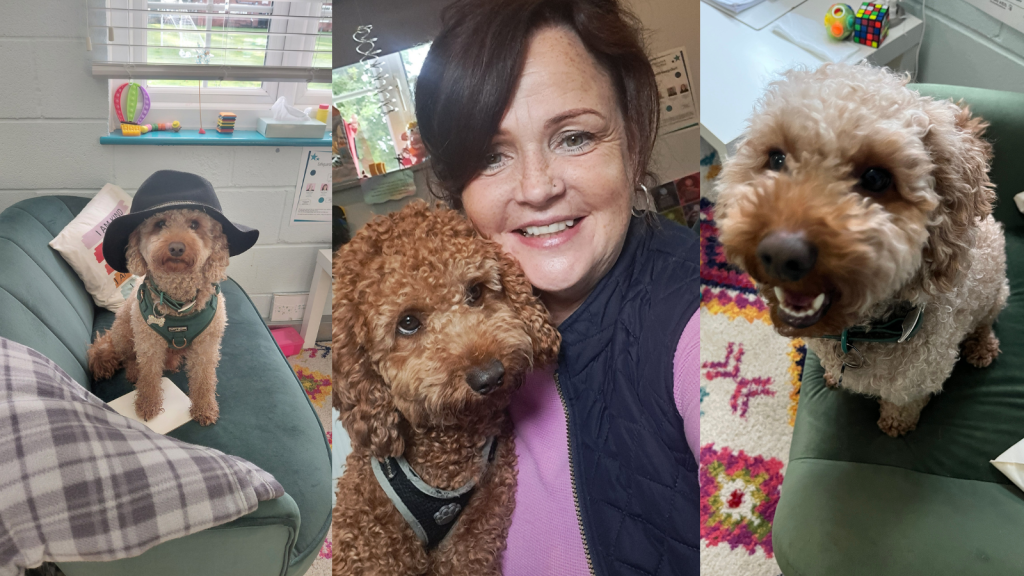
Sandy Dunphy, Accredited Play Therapist and Senior Counsellor, has worked at the Together Trust for 21 years. Throughout her time at the Together Trust, she has been wearing many hats. Today she is leading the innovation in our Therapy services at Inscape House School by becoming our first Animal Therapist.
Starting out with a passion for helping
She first joined us as a drama teacher at a service we used to run called CYCES (Child Youth Care Education Services), which later became Ashcroft school.
Whilst working with young people enabling them to express themselves via drama and theatre, she realised she wanted to continue her learning and complete a master’s in Drama Therapy.
That’s when she came across Play Therapy and discovered all the benefits it could have for the children with challenging behaviours she was working with.
She was supported by her line manger to set up a Play Therapy room to complete her practical work and eventually finish her diploma becoming a Play Therapist.
What is play therapy?
Sandy explains: “Play therapy supports children and helps them work through their emotions, their feelings and developmental stages that they may have missed.
It’s a way of supporting children to express themselves through play, because ‘Play is their language, toys are their words”, as Dr Gary Landreth said.”
As Sandy puts it, there is more to Play Therapy than people realise.
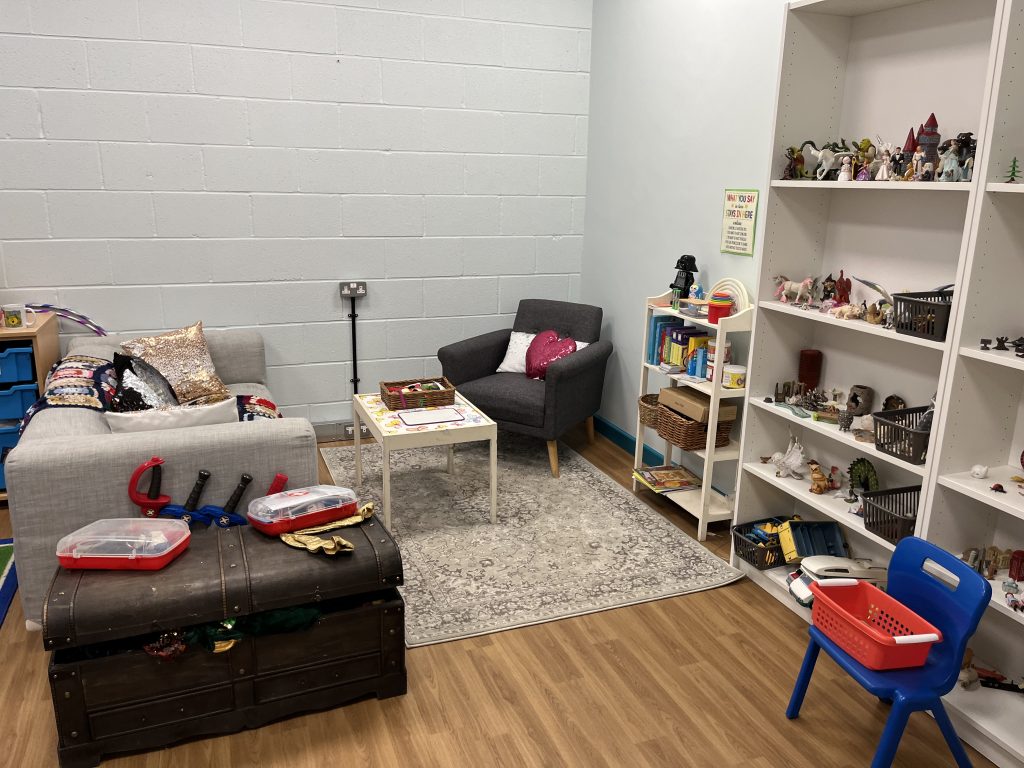
Children can choose a medium to play with, which could be sand, water, clay, musical instruments, art, puppets, doll houses, small world figures and role play.
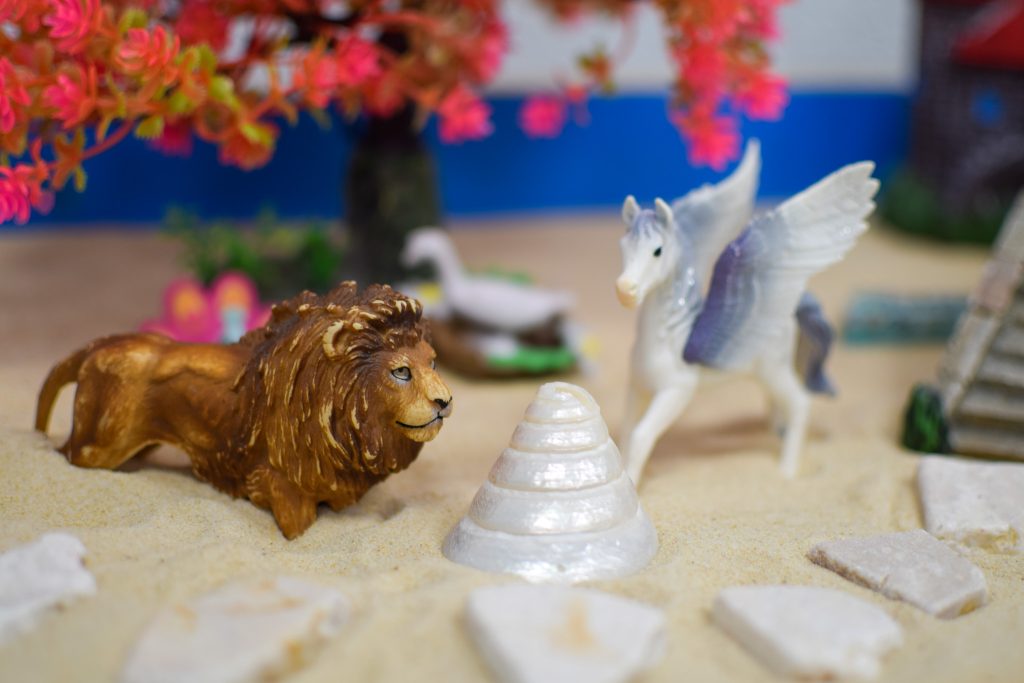
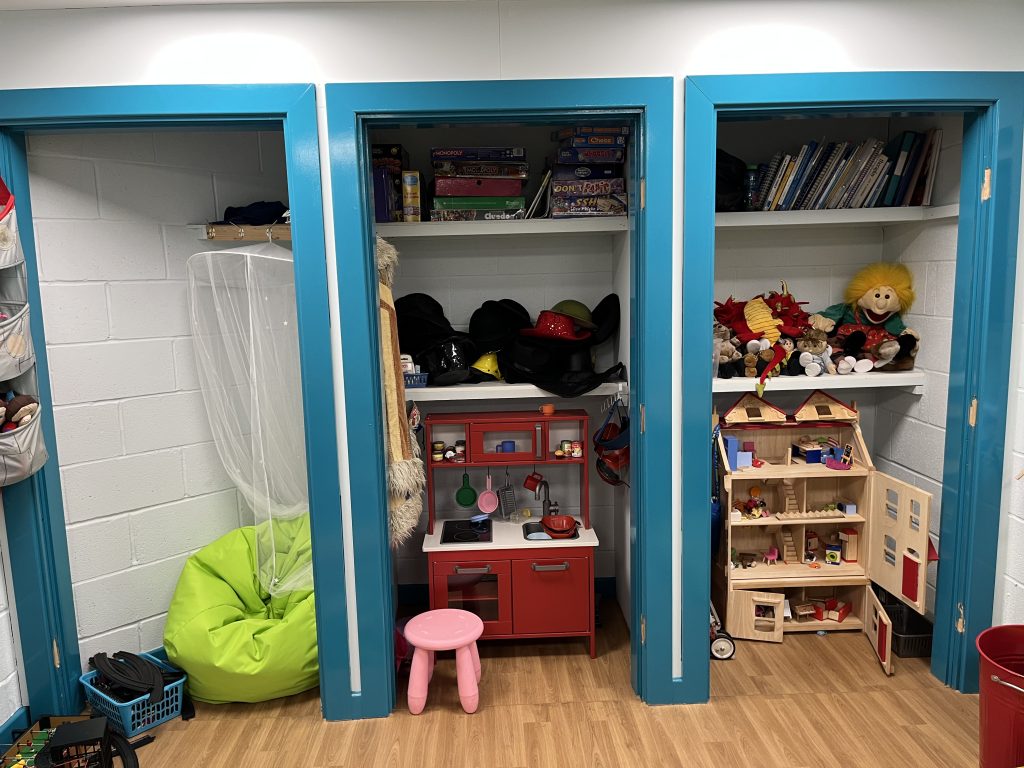
And the most important part is that play therapy is non –directive, children aren’t being told what to say or do, they play out experiences and issues that may be concerning or on their mind. Boundaries are put in place, and children have the freedom to choose what they want to do and how they want to play.
Children get to explore their thoughts and feelings in creative and dynamic ways, without having to use words to articulate themselves. They have autonomy to be their authentic self to express experiences and feelings through an imaginative self- expressive process in the context of a trusted relationship with the therapist, and without any direction from the therapist. As a therapist, I look for themes in their play: for example, if they are struggling with a particular area or experience in their life and this is demonstrated in their play, I use skills of reflection, paraphrasing and tracking their play process.
Transitioning into Animal Assisted Play Therapy
At the time, Sandy’s 13-year-old dog Maisie was getting older and struggling at home by herself. So, Sandy started bringing Maisie in.
That’s when she realised the dynamic in her therapy sessions changed when the dog was present. Children loved petting Maisie and interacted with her in a way they weren’t with toys.
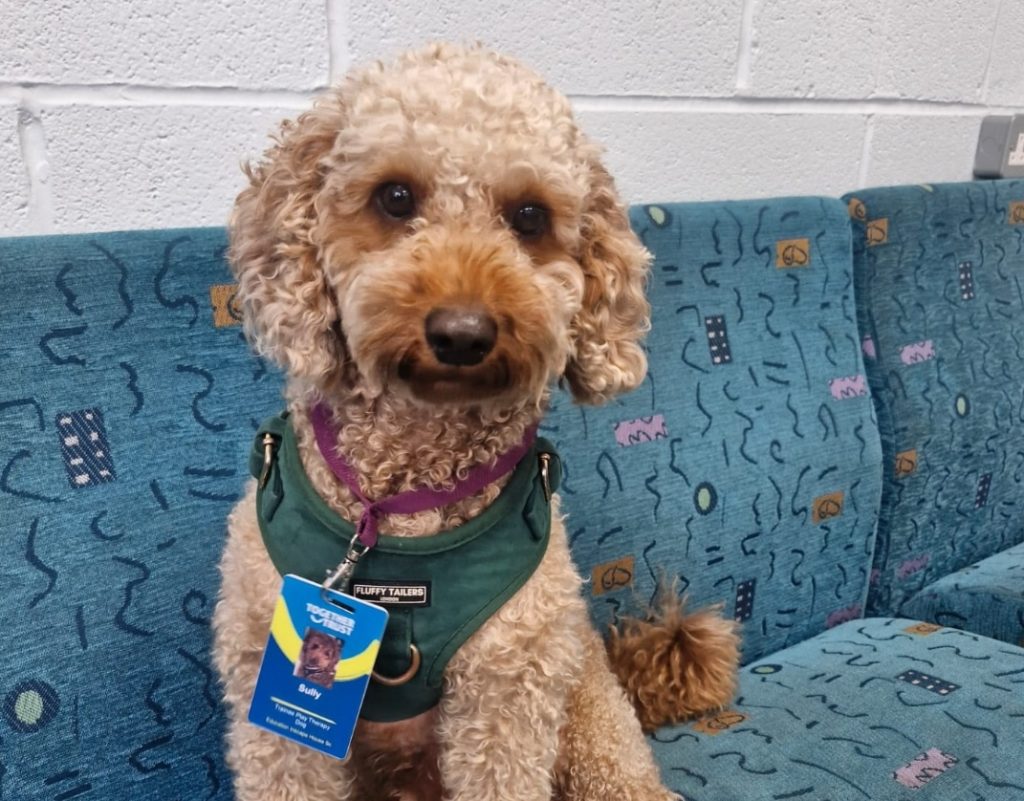
Sandy then welcomed a new addition to her family: Sully, our resident Therapy Dog and her personal companion. She was determined to bring Sully into Play Therapy and started an Animal Assisted play Therapy course in July 2025.
After months of learning, assessments, and assignments, Sandy got her Level 1 in July 2025 and is due to complete her level 2 in July 2026, after which she will become a certified Animal Assisted Play Therapist.
Sully has now been working with our autistic students at Inscape House School for 2.5 years, but his journey hasn’t been easy. He had lots of training to do around loud noises, interacting with children, and being a calm and collected companion. Becoming a ‘Therapy dog’ is a strict process and only dogs that pass certain assessments can become therapy dogs.
But he’s won everyone’s hearts!
“The children adore him. Animal Assisted Play Therapy is so rewarding for children because it can support them in building empathy, self-efficacy, confidence, eye contact,” says Sandy
What is an Animal Assisted Play Therapy Session like?
The Animal Assisted Play Therapy process follows the same pattern as Play Therapy: children come in and choose what they want to play with. Sully is trained to match their energy so he’s ready to be active when children are interested in more energetic play or prepared to sit and wait when children don’t show interest in him or want a calmer session.
The therapist will work with “Hopes and Expectations”, set from parents or teachers, for example self-confidence, self-esteem, loss, peer relationships, anxiety, building rapport, or developing relationships. These are then used as aims for the therapy sessions and built into the play, using interventions between the child and Sully. The primary aim is to improve psychological health, emotional well- being, and social skills while ensuring Sully’s welfare and his voluntary engagement is paramount. AAPT can foster attachment and connection, along with emotional regulation to support the processing of trauma or resolving issues.
Want to listen to this story instead? Watch Sandy talk about her experience:

Therapy support
At Inscape House School we support young people to conquer barriers and surpass expectations, by understanding that they have a distinct way of thinking and perceiving the world.
Play therapy is one of many ways in which we support students to access the best education.
Our experienced multi-disciplinary team provides tailored therapy support in school to help students access all facets of the curriculum.