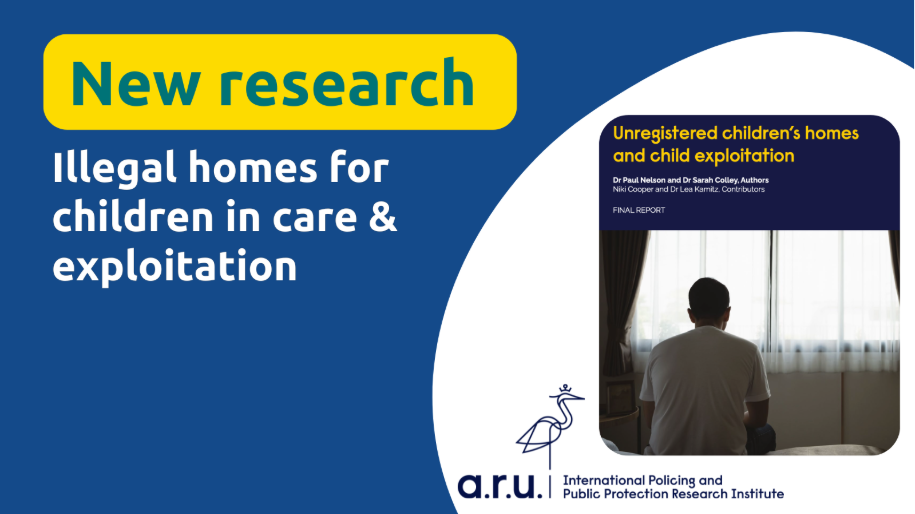
Last week, important research from Anglia Ruskin University shed light on what can only be described as a national scandal within our children’s care system: the increasing use of illegal (unregistered) children’s homes and their links to child exploitation.
At Together Trust, we strongly welcome this report. It brings much-needed attention to an issue we, and others across the sector, have been raising for some time, and helps address the lack of academic research in this area. The report raises urgent questions about how a system designed to protect children is, in some cases, exposing them to harm. In this blog, we set out the key findings from the research.
The scale of illegal homes for children in care is stark.
The report highlights a 546% increase in illegal children’s homes in England between 2020 and 2024.
At one point in September 2024, 775 children, some as young as two, were living in these settings.
These are not always “homes” in any meaningful sense. Children are being placed in bedsits, caravans, and other unsuitable accommodation.
Almost 90% of local authorities have used illegal homes in the past year. And yet, there is no consistent national system to track where these homes are or how many children are living in them.
This lack of visibility creates dangerous blind spots. Children can be placed far from home, in areas where professionals do not even know they are there until something goes wrong.
‘‘…We must address the fact that we are failing hundreds of children by allowing them to be hidden from protection in unregistered homes.” Sarah Colley, Research Fellow at ARU’s International Policing and Public Protection Research Institute
A system driven by pressure, not children’s needs
The research makes clear that this is not simply a question of “bad provision”. It is a system under strain. There are not enough regulated children’s homes, foster placements, or secure children’s homes. At the same time, the number of children entering care, particularly teenagers, is increasing.
In this context, decisions are often driven by availability and cost, rather than what is right for the child. The report highlights how placement decisions can prioritise finding any available bed over careful matching of needs, risks, and relationships. Children with very different needs are sometimes placed together, or even with adults; some of them offenders, increasing the risk of harm.
Where care is missing, exploitation can take hold
Children in care are already more vulnerable due to:
- trauma and abuse
- disrupted relationships
- unmet emotional needs
- social isolation
Unregistered settings can intensify these risks. The report identifies:
- weak or absent safeguarding arrangements
- inconsistent or untrained staff
- poor supervision and high staff turnover
- lack of therapeutic, relationship-based care
Some homes are described as “cold” and not homely, with little consistency or stability, exactly the conditions in which exploitation thrives.
Children in these settings can become:
- highly visible to perpetrators, due to isolation and unmet needs
- but invisible to safeguarding systems, due to poor oversight and information sharing
This creates what one participant described as a “perfect storm”, where vulnerabilities, unsafe environments, and exploitative actors converge.
Exploitation is happening: online, offline, and within placements
The report shows that exploitation takes many forms:
- Criminal exploitation, including county lines activity
- Sexual exploitation, often through grooming and coercion
- Financial exploitation, including manipulation of money and bank accounts
Perpetrators are adapting quickly. Social media is increasingly used to recruit children, with offers of “work” masking exploitation. There is also evidence of:
- peer-on-peer recruitment within placements
- children being targeted due to unmet needs, such as belonging or financial security
- concerns that organised crime groups are aware of, and in some cases interacting with unregistered homes
In some cases, children have been placed in environments alongside individuals who pose a risk, or in settings where safeguarding responses are inadequate.
Why oversight and accountability matter
A key finding from the report is the impact of lack of regulation.
‘‘…Where children are living in homes that sit outside proper regulatory oversight, there must be serious questions about safety, quality and accountability, and the linked risks, from county lines exploitation to inappropriate care must be addressed.”Co-author Dr Paul Nelson, Senior Lecturer in Criminology at ARU
Registered children’s homes are subject to:
- Ofsted inspection
- clear care standards
- trained staff requirements
- independent scrutiny
Unregistered settings operate outside of these safeguards.
There is:
- no guarantee of minimum standards
- no consistent monitoring
- no requirement to notify Ofsted when children are placed there
- little clarity on consequences for providers operating illegally
Without oversight, risks can escalate unnoticed. As the report makes clear, safeguarding cannot work without visibility, accountability, and a capable workforce.
Reflections
‘‘There is evidence that the law is not being consistently followed. Local authorities are placing children in illegal settings with limited accountability, while enforcement appears weak. This raises serious concerns about the effectiveness of the current regulatory framework, particularly as supported accommodation for 16 and 17 years old in care has recently been brought into regulation. Children in care are among the most vulnerable in our society. They should be receiving the highest levels of protection and care, not being placed in settings that are not in their best interests, creating the perfect environment for exploitation, and other harms’’. Styliana Pasiardi, Policy and Campaigns Manager, Together Trust
This research must be a wake-up call
At Together Trust, we welcome and support the recommendations set out in the research. We believe it is crucial to put children’s relationships and needs at the centre of decision-making.
When the system lacks capacity, oversight, and accountability, it can create the very conditions that allow harm to happen. Children in illegal homes are not just falling through the cracks. In many cases, they are being placed into environments where those cracks are widened. We cannot accept this as inevitable. A care system should be a place of safety, stability, and healing. Right now, for too many children, it is not. That must change.
Urgent action is needed:
- Phase out unregistered homes for children in care
- Guarantee that every child receives regulated care up to at least age 18
- Publish a national sufficiency and workforce plan to increase the availability of regulated, therapeutic care
How you can get involved
- Share Anglia Ruskin University’s report: Unregistered children’s homes and child exploitation
- Share this blog on your social media and tag Together Trust to help raise awareness.
- Sign up for our campaign updates, to stay informed about our policy and campaigning work.
- Read about: our work on illegal homes here
- Check our website news for updates and other opportunities to take part.