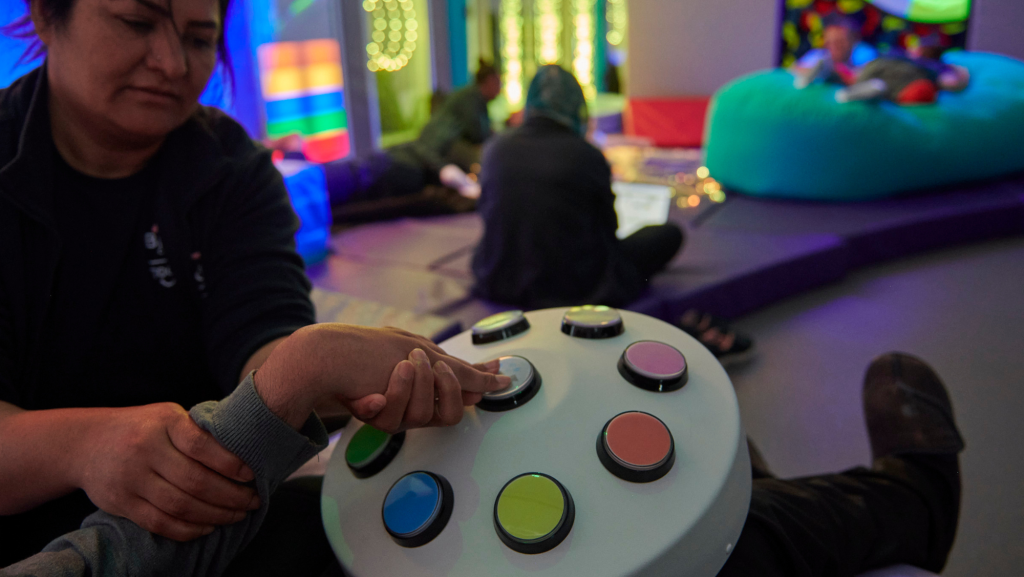
AAC stands for Augmentative and Alternative Communication and lots of our students access AAC to support both expressive and receptive communication.
Bridge College uses Augmentative and Alternative Communication (AAC) to promote independence and reduce frustration caused by communication barriers. AAC supports language development, social interaction, and improves quality of life by enabling students to participate more fully in college life.
There are two types of AAC: Unaided and Aided.
Unaided AAC
Does not require external tools
Relies on the users body such as: gestures, Makaton and/or British sign language, facial expressions and body language.
Aided AAC
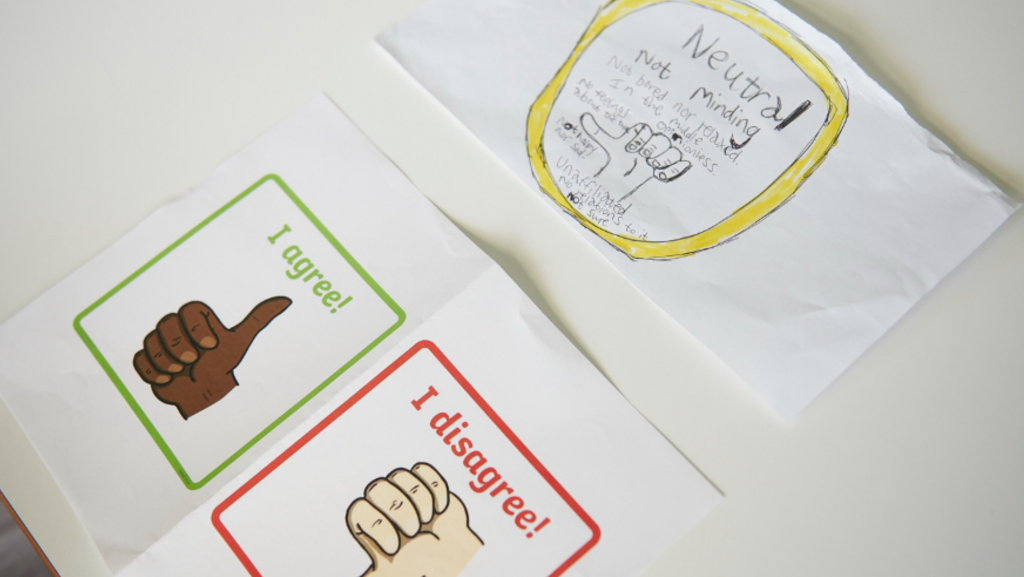
Involves the use of equipment or devices, which can be paper-based AAC:
Communication boards, books with pictures or symbols, alphabet board, pens and paper.
Or powered AAC:
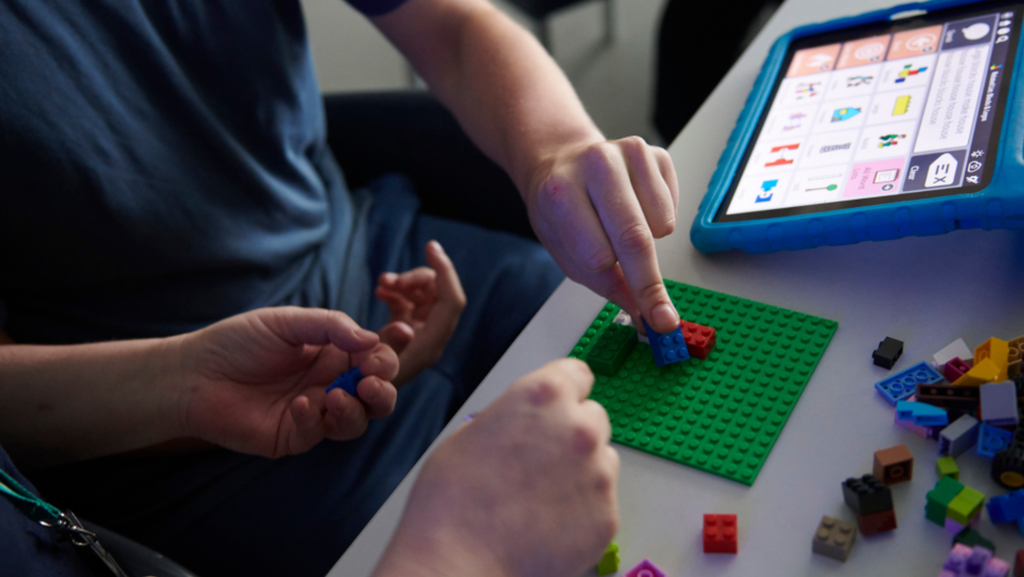
Electronic devices that produce speech (speech generating devices), tablets or apps designed for communication.
Bridge College learners use a wide variety of communication methods, including:
- Gestures
- Facial expressions
- Body movements and language
- Vocalisations
- Speech
- Makaton signing
- Communication books
- Communication devices
Makaton is a sign and symbol system that supports spoken language. Signs are used alongside speech, following the order of spoken words.
Vocalisations refer to sounds or noises that aren’t recognisable as speech but still serve a communicative purpose—such as gaining attention or expressing refusal.
Communication books are paper-based tools that support interaction. These can range from a few symbols per page to up to 40 symbols across a two-page spread. At Bridge College, we create Pragmatic Organisation Dynamic Display (PODD) books and bespoke versions tailored to individual student needs.
Communication devices are electronic tools with specialised software that support communication. These devices can be accessed in various ways, including direct touch, joysticks, or eye-gaze technology.
For students whose communication is more subtle, such as through facial expressions or body movements, strong, trusting relationships with staff are key to understanding and supporting their needs.
Bridge College learners also use Intensive Interaction, a person-centred approach that focuses on building positive relationships and enhancing communication through shared experiences.
The SaLT team at Bridge wanted to highlight how helpful AAC can be and how we all access AAC daily, including pictures on menus, road signs and gesture.
To do this, earlier this term, the SaLT team led an AAC cafe. In the cafe both colleagues and students used a range of AAC support to order from our amazing menu.
The team also created displays to raise awareness of accessible apps, using examples of TV and film characters who rely on alternative communication methods. In addition, they promoted useful and informative books from the college library.
Watch the highlights of ACC Month on Bridge College’s Facebook page